
Wedding Plus One Etiquette: How to Handle Uninvited Guests
Saying no to unexpected plus ones doesn't have to damage friendships when you have a clear, kind plan in place.
Aisle Bliss
June 4, 2026 · 5 min read
Wedding plus one etiquette is one of the most quietly stressful parts of planning a wedding. You set your guest list carefully, you know your venue capacity, and then an RSVP arrives with an extra name you don't recognize. Or a family member calls to ask if their new partner can come. These moments feel awkward because they sit right at the intersection of budget, logistics, and real relationships. The good news is that handling them well is mostly about having a clear policy before the invitations go out, and a calm script ready for when things come up anyway.
Set Your Plus One Policy Before You Send a Single Invite
The single most effective thing you can do is decide your policy early and apply it consistently. Consistency is what protects you from accusations of favoritism later.
Common approaches include:
- Plus ones only for married or engaged couples. This is the most traditional rule and the easiest to defend.
- Plus ones for guests who have been with their partner for a defined length of time, such as one year or longer.
- Plus ones only for wedding party members and immediate family.
- No plus ones at all, which is a legitimate choice for small or intimate weddings.
Write your rule down. Share it with both sets of parents before invitations are printed. This means that when Aunt Carol calls to ask about her new boyfriend, your parents can back you up with the same answer.
How to Address the Envelope Correctly
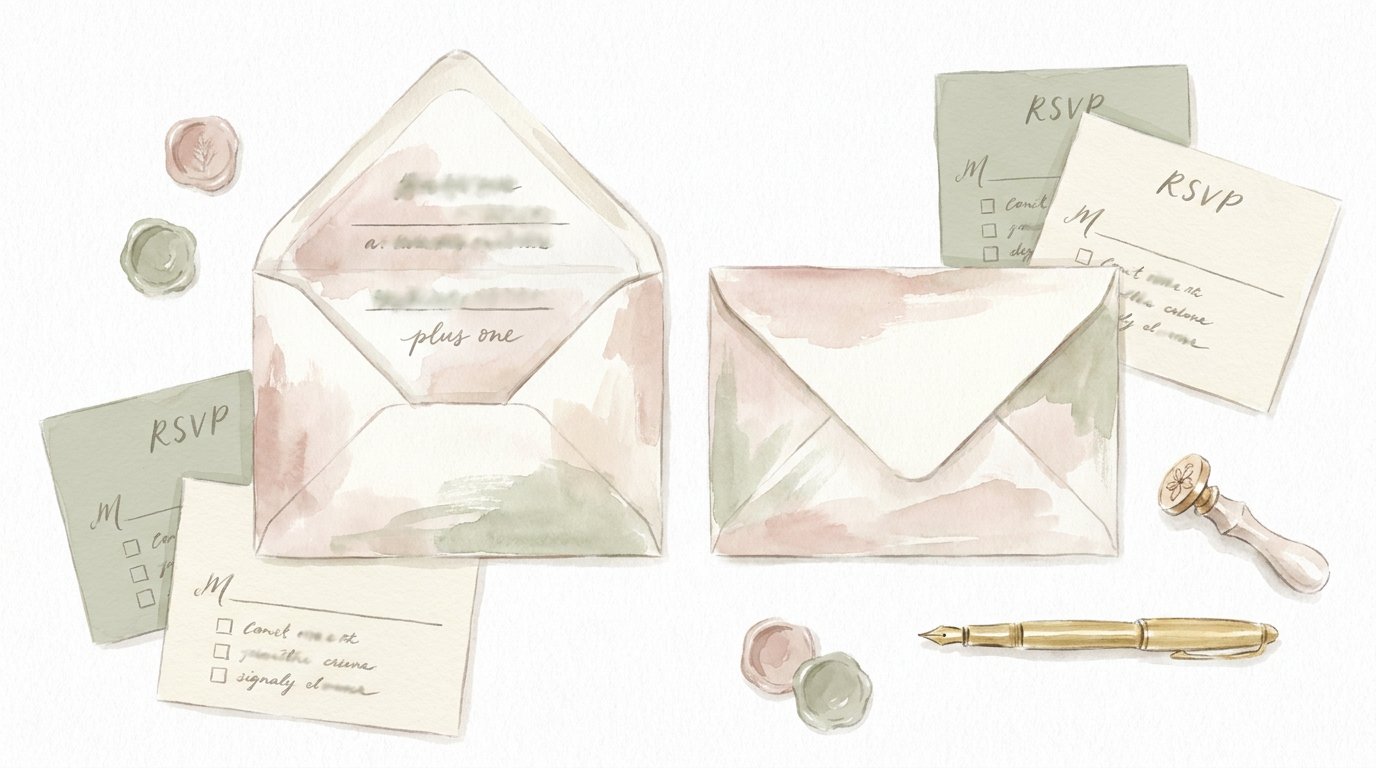
Your invitation does the first round of communication for you. If you address an envelope to one person by name, that is a clear signal that only that person is invited. If you want to invite a couple, address it to both of them by name.
Avoiding vague phrasing like "and family" or "and guest" unless you genuinely mean it. If your venue has a firm capacity, print your RSVP card with a line that reads "We have reserved ___ seats in your honor" and fill in the number. This removes ambiguity entirely and saves you from having to have awkward phone calls later.
Scripts for Saying No Gracefully
Even with a perfectly addressed invitation, some guests will still ask. Have a response ready so you're not caught off guard.
When a Guest RSVPs With an Extra Name
Call or message them directly rather than ignoring it. A simple, warm message works well:
"We're so glad you're coming. I noticed you included [name] on your RSVP and I want to make sure there's no confusion. Our venue has a strict capacity limit so we weren't able to extend plus ones to everyone. We'd love to celebrate with you, and I hope you'll still be able to make it."
Don't over-explain or apologize excessively. A brief, kind explanation is more respectful than a lengthy justification.
When a Family Member Asks Directly
Family requests often come with more pressure, especially when a parent is doing the asking on someone else's behalf. Hold your boundary without making it personal:
"We've had to keep our list really tight because of our venue size. We made a rule that plus ones are only for couples who are married or engaged, and we're applying that across the board. I know that's disappointing and I'm sorry about that."
The phrase "across the board" does a lot of work here. It signals that this isn't a personal judgment about their family member's relationship.
When Someone Shows Up Uninvited on the Day
This is rare, but it happens. Talk to your venue coordinator or a trusted family member in advance so they know to handle any unexpected arrivals. You don't need to manage this yourself on your wedding day. Brief one person, give them the guest list, and let them run point.
Common Scenarios and How to Handle Them
The New Partner Nobody Has Met
Some guests will argue that they can't attend without their partner. Acknowledge that and give them a genuine choice:
"I completely understand if you need to decline. We'd miss you, but I respect that it might not work for you without [name] there."
This puts the decision back in their hands without you capitulating on your guest count. Most people will attend anyway.
The Guest Who Booked Travel Already
Occasionally a guest will tell you their uninvited plus one has already booked a flight. This is not your problem to solve, even though it feels uncomfortable. Respond with empathy but don't let it change your answer:
"I'm so sorry to hear that, that must be frustrating. Unfortunately we can't change our numbers at this point. I really hope [guest] can still join us."
When Parents Pressure You to Add Names
If parents contributed financially to the wedding, they may feel entitled to add names to the list. If you set guest list boundaries as part of the initial money conversation, you have ground to stand on. If you didn't, now is a good time to have that conversation calmly and directly:
"We're grateful for your contribution and we want you to feel proud of this wedding. We've already hit our venue's limit and we can't add more guests without affecting the experience for everyone. Can we find another way for you to feel included in planning?"
Offering a different form of involvement, like input on the rehearsal dinner list or the seating arrangement, can redirect the energy productively.
Protecting Your Guest List After RSVPs Close
Once RSVPs are in, your numbers are locked. Don't offer spots that open up from declines to people who were not on the original list. It is tempting to be generous, but filling gaps with last-minute additions creates its own logistics headache and can cause hurt feelings if word spreads about who got a late invite.
If you do have genuine room and you want to invite additional guests after your initial response deadline, reach out to that second tier of guests early enough that they don't feel like an afterthought. Give them at least four to six weeks' notice if possible.
What Good Wedding Plus One Etiquette Actually Protects
Wedding plus one etiquette isn't about being rigid or unkind. It's about protecting three things: your budget, your venue's safety capacity, and your own peace of mind on a day when you have a hundred other things to think about. Guests who genuinely care about you will understand a clear, consistent, and kindly delivered answer. The ones who push back hard after a gracious no are revealing something about their own expectations, not about your character as a host.
Build your policy early, put it in writing for your own reference, brief your parents and wedding party, and trust that a warm but firm response is enough. You don't owe anyone a lengthy defense of your guest list, and you don't have to feel guilty for protecting your wedding day.