
Wedding Venue Cancellation: What Couples Should Do
A last-minute venue cancellation is devastating, but knowing exactly what to do next can save your wedding date.
Aisle Bliss
June 2, 2026 · 5 min read
A wedding venue cancellation is one of the worst pieces of news a couple can receive. Whether the venue closed suddenly, had a fire, double-booked your date, or simply went out of business, the panic is real and immediate. The good news is that couples do recover from this, often planning beautiful weddings on short notice. What matters most in the first 48 hours is staying systematic rather than reactive.
Understand Exactly What Happened
Before you do anything else, get the full story in writing. Call your venue contact, but follow up every conversation with an email so you have a paper trail. Ask specifically why the cancellation is happening, when you were supposed to have been notified, and whether the closure is permanent or temporary.
This matters because the reason behind the cancellation affects your legal options. A venue that closes due to bankruptcy has different obligations than one that double-booked your date. Knowing the cause helps you figure out whether you can recover your deposit through the contract, your credit card company, or small claims court.
Pull Out Your Contract Immediately
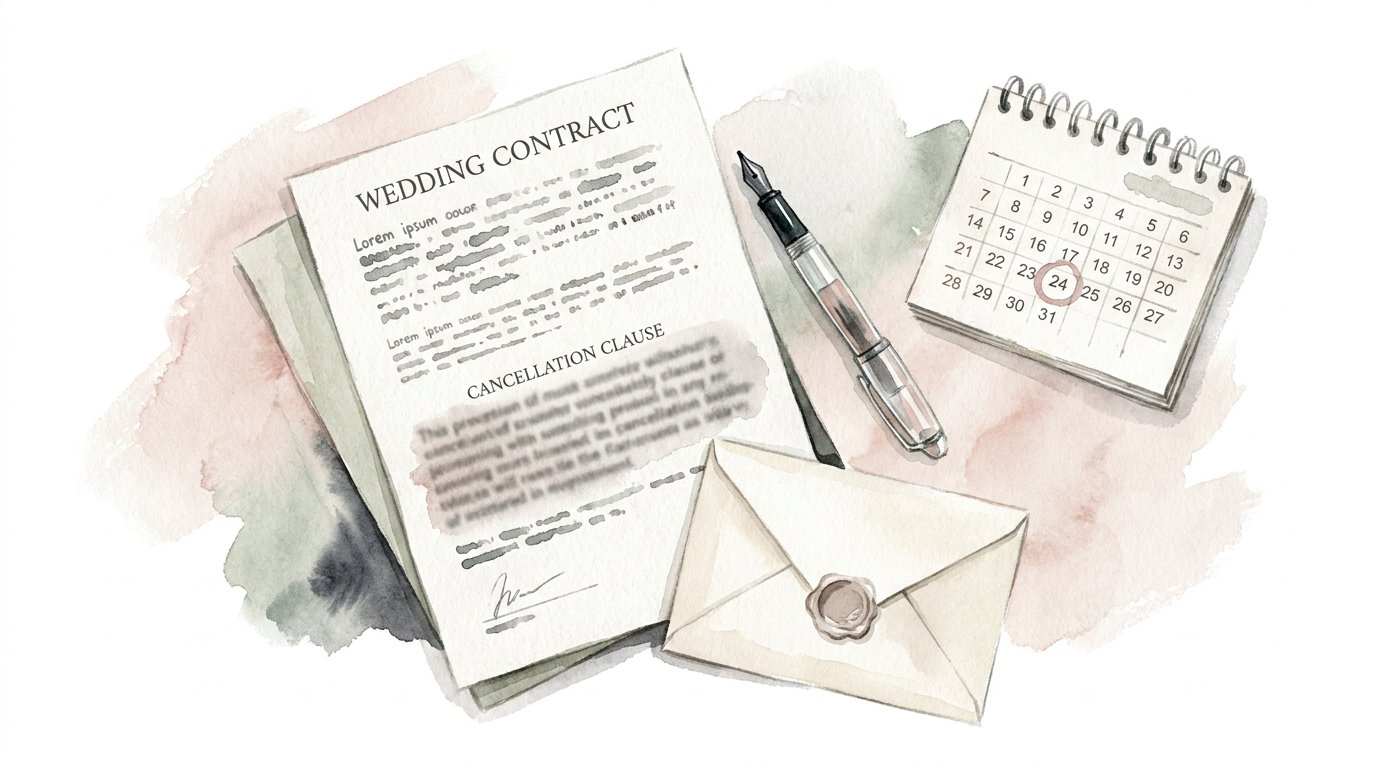
Your venue contract is your most important document right now. Read the cancellation and force majeure clauses carefully. Force majeure clauses cover events outside anyone's control, like natural disasters, but some venues try to apply them too broadly. If the venue canceled for a business reason rather than an act of nature, that clause may not apply.
Look for the following specific things in your contract:
- What refund you are owed if the venue cancels
- The timeline the venue must follow when notifying you
- Whether there is a clause requiring them to help you find alternative arrangements
- Any arbitration requirements before you can pursue legal action
If your contract language is confusing, many family law or contract attorneys offer short consultations for a flat fee. One hour of legal advice can clarify whether you have grounds to recover your full deposit.
Contact Your Wedding Insurance Provider
If you purchased wedding insurance, call your provider the same day you receive the cancellation notice. Most policies have a window for filing claims, and missing that window can void your coverage. Wedding insurance typically covers venue cancellations, and a good policy can reimburse deposits, cover the cost of reprinting stationery with new venue details, and sometimes cover the price difference if your replacement venue costs more.
If you did not purchase wedding insurance, this is worth noting for any future events you plan. Policies generally cost between $150 and $600 depending on your coverage level and are usually available until a few weeks before the wedding date.
Dispute the Charge If You Paid by Credit Card
If you paid your venue deposit by credit card and the venue is refusing to refund you, file a chargeback with your card issuer right away. Most credit card companies allow chargebacks for services not rendered, which applies here since the venue can no longer provide what you paid for.
Gather your contract, your payment receipts, and any written communication showing the cancellation. Submit all of it with your chargeback request. The window to dispute a charge is typically 60 to 120 days from the statement date, so do not wait.
Start the Search for a New Venue
Cast a Wide Net Quickly
Contact every venue you originally toured, even ones you ruled out for minor reasons. Explain your situation honestly. Many venue managers will go out of their way to help a couple in this position, and some may have cancellations of their own that free up your date. Start with venues that match your guest count and general style, but stay flexible on aesthetic details. You can style almost any space with the right decor.
Also consider venue types you may not have originally thought about: restaurant private dining rooms, hotel ballrooms, art galleries, botanical gardens, community estates, and wineries. A space that feels unconventional for a wedding can be transformed more easily than couples expect.
Be Upfront With Every Vendor
Once you have a potential new venue in mind, contact your other vendors immediately: your caterer, photographer, florist, band or DJ, and officiant. Some may have conflicts with a new location or date shift. The sooner you communicate, the more options everyone has. Vendors who know about the situation early are far more likely to be flexible than ones who find out at the last minute.
If your date needs to change slightly to accommodate the new venue, check with your most important vendors first before committing to that date. Your photographer and officiant typically have the tightest availability windows.
Notify Your Guests Strategically
Send a Digital Update First
Do not wait until you have a new venue confirmed to communicate with guests. Send a brief, honest message letting them know there has been a venue change and that you will follow up with details shortly. Guests who have already booked travel or accommodation need this information as quickly as possible.
A simple email or wedding website update is the fastest way to reach everyone at once. If you are using a wedding planning platform like Aisle Bliss, you can update your wedding website in minutes and send a group message to all your guests from one place.
Update Your Stationery Thoughtfully
If your formal invitations have already gone out, you do not necessarily need to reprint everything. A small insert card or a digital follow-up with the new venue details is perfectly acceptable. Save the reprinting budget for your day-of stationery like programs and menus, which are printed closer to the date anyway.
Take Care of the Practical Details
Once you have a new venue confirmed, work through this checklist:
- Update your wedding website with the new address and any parking or transport notes
- Confirm whether your vendors need updated contracts or addendums for the new location
- Check whether the new venue has its own preferred vendor list and whether that creates any conflicts
- Review your timeline to account for any differences in the new space, such as a different layout or earlier end time
- Update your directions for any guests with printed materials
If the new venue requires a different layout for dining or ceremony, adjust your seating chart and floor plan as soon as possible. Venue changes often ripple into logistics like shuttle routes and ceremony timing, so walk through your entire wedding day schedule with the new space in mind.
Protect Yourself Going Forward
Once you are through this experience, a wedding venue cancellation tends to make couples much more careful about contracts and insurance. When you sign with your new venue, read every clause before signing. Ask specifically what happens if the venue needs to cancel, what written notice is required, and what refund timeline applies.
Purchase or upgrade your wedding insurance if you have not already. Many couples assume insurance is only for weather events, but coverage for vendor failure and venue closure is just as valuable and often included in standard policies.
This situation is stressful, and it is completely fair to feel overwhelmed. But couples who move quickly, stay organized, and communicate clearly almost always find a solution. Your wedding is still happening, just in a different room.